A recent report by the Association for Cultural Enterprises, A Seat at the Table, argues that commercial expertise should play a greater role in the strategic decision-making of cultural organisations.
It’s a valuable contribution.
For years, many museums, heritage sites and cultural institutions have treated commercial functions as operational necessities rather than strategic partners. The report argues that financial resilience is inseparable from mission delivery.
I agree.
While reading it, I found myself asking a different question.
What if commercial expertise is only one of many voices still missing from the table?
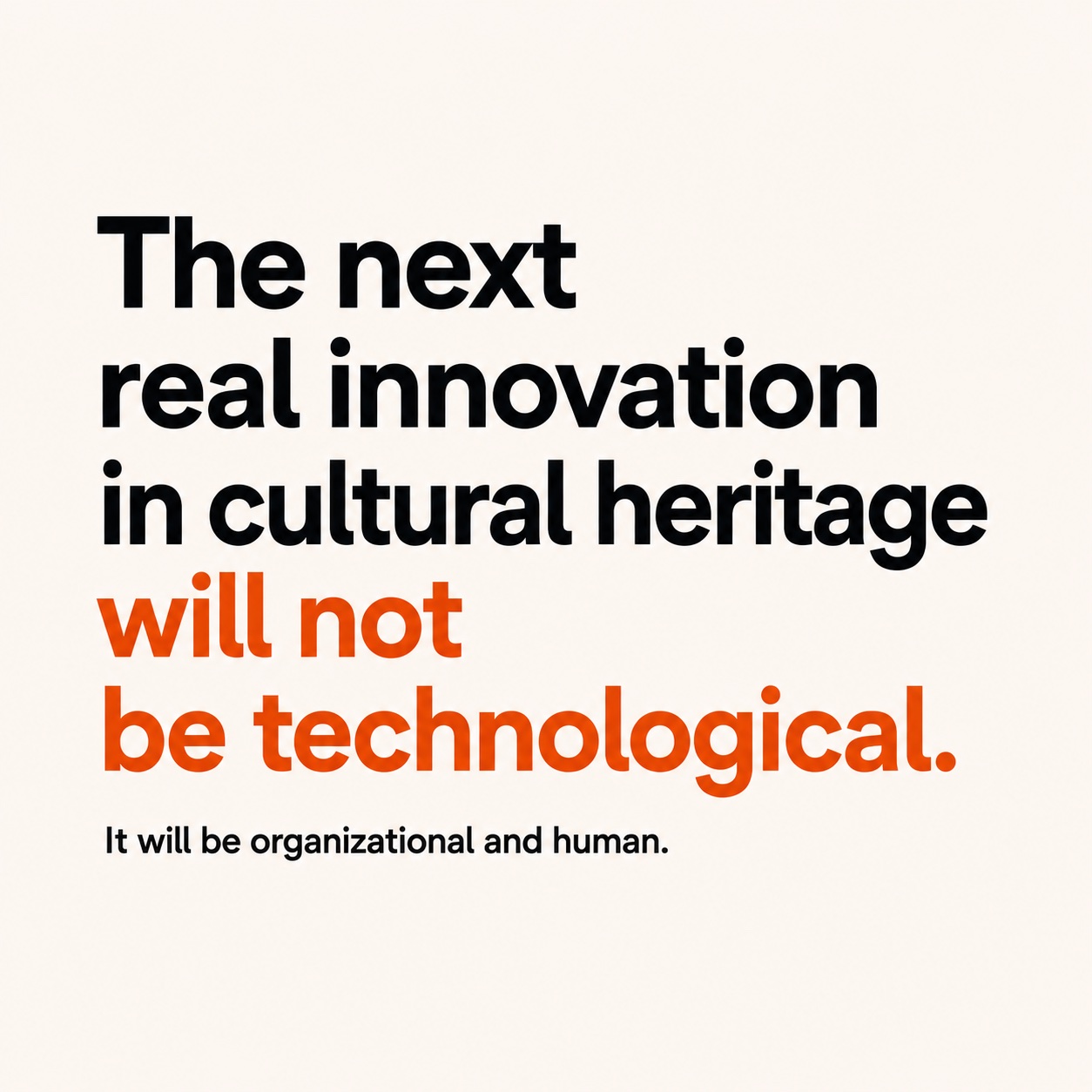
For decades, the cultural sector has discussed transformation primarily through technology. We have invested in digitisation, AI, immersive experiences, audience analytics and, more recently, commercial sustainability. These are all necessary conversations.
Beneath them sits a more fundamental question we rarely ask:
Who participates in the decisions that shape cultural institutions?
Governance as invisible infrastructure
Governance is often mistaken for administration. In reality, it is the invisible infrastructure of every institution. It shapes strategic conversations and the weight given to different kinds of expertise. It sets the direction of priorities. Every significant decision begins there.
Historically, museums and heritage organisations have been led by outstanding disciplinary expertise. Curators, conservators, archaeologists, historians and architects have shaped institutions that preserve and interpret our collective heritage. Their contribution remains essential.
Today’s institutions are expected to do much more than preserve collections. They must engage communities, build partnerships, demonstrate impact, navigate political complexity, respond to economic uncertainty, attract new audiences and remain financially sustainable. These challenges rarely yield to a single disciplinary perspective.
Broadening the invitation
Commercial teams deserve a seat. Of course they do. The question underneath is whether our governance models can reflect the complexity of the institutions we’re trying to lead.
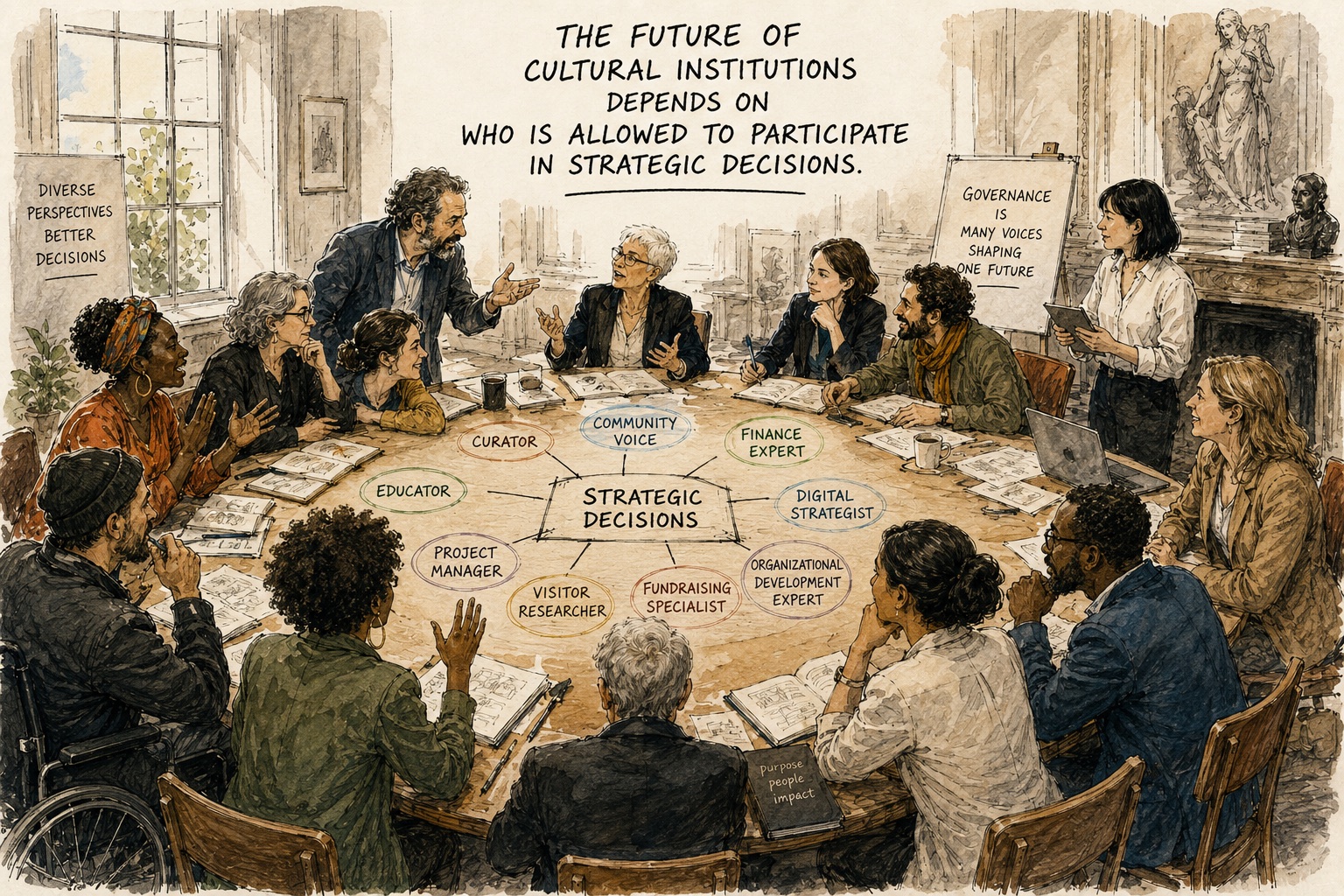
Today’s cultural organisations also need the perspectives of project managers, organisational development specialists, educators, visitor researchers, fundraisers, community engagement professionals and experts in evaluation and change management. These disciplines complement traditional expertise, bridging scholarship with implementation and connecting long-term mission with practical sustainability.
The purpose here is better decisions, more than more voices in the room.
Where innovation actually comes from
When the same professional backgrounds dominate every strategic conversation, institutions inevitably develop blind spots. Innovation becomes harder because different ways of thinking never truly meet each other.
The cultural sector often asks how to become more innovative. A better starting question might be this: what kind of conversations are we structured to have?
Innovation is rarely the result of a single brilliant idea. More often, it emerges from meaningful conversations between people who understand the same institution from different perspectives. Governance matters because it determines whether those conversations happen at all.
The wider table
The report A Seat at the Table makes a compelling case for embedding commercial thinking into institutional strategy.
I would simply broaden the invitation.
The future of cultural institutions will depend on governance models where diverse forms of knowledge genuinely participate in shaping decisions. Commercial expertise takes its seat alongside a wider circle of voices at that table.