The next real innovation in cultural heritage will not be technological.
It will be human.
And, perhaps more importantly, it will be financial.
Because the real question is not what we are building. It is what we are choosing to fund, and why.
The question we are not asking
In cultural heritage, we are investing heavily in digital innovation. 3D models, AI, digital twins, advanced documentation systems.
These are valuable tools. In many cases, necessary.
But the scale and direction of funding reveal something deeper. We are treating technology as the primary driver of transformation, while leaving largely underfunded the conditions that make cultural heritage meaningful, usable, and sustainable.
Let’s pause on a simple question:
What are we actually trying to achieve?
Not what we produce. Not what we digitize.
But:
- What changes because of our work?
- Who benefits from it?
- How does cultural heritage generate value, socially, economically, territorially?
The structural gap
Here lies a structural issue.
In many funding frameworks, at national and European level, cultural projects are still evaluated primarily on:
- activities delivered
- outputs produced
- compliance with predefined formats
While the real question that drives funding decisions elsewhere is different:
What measurable impact does this create?
Other sectors have already made this shift.
Healthcare measures outcomes. Education tracks learning. Workforce programs measure employment.
Their funding depends on their ability to demonstrate change.
Cultural heritage, in many cases, does not.
The paradox
We continue to invest in tools, including very advanced digital ones, without equally investing in the capacity to:
- define impact
- measure it
- communicate it
- build strategies around it
And when impact is not clearly articulated or measured, it becomes difficult to justify sustained investment.
This is not a technical problem. It is not a communication problem.
It is a structural problem in how the sector positions its value.
Beyond technology
The shift is not away from technology, but beyond it.
A human-centered approach to cultural projects is not about “soft skills”.
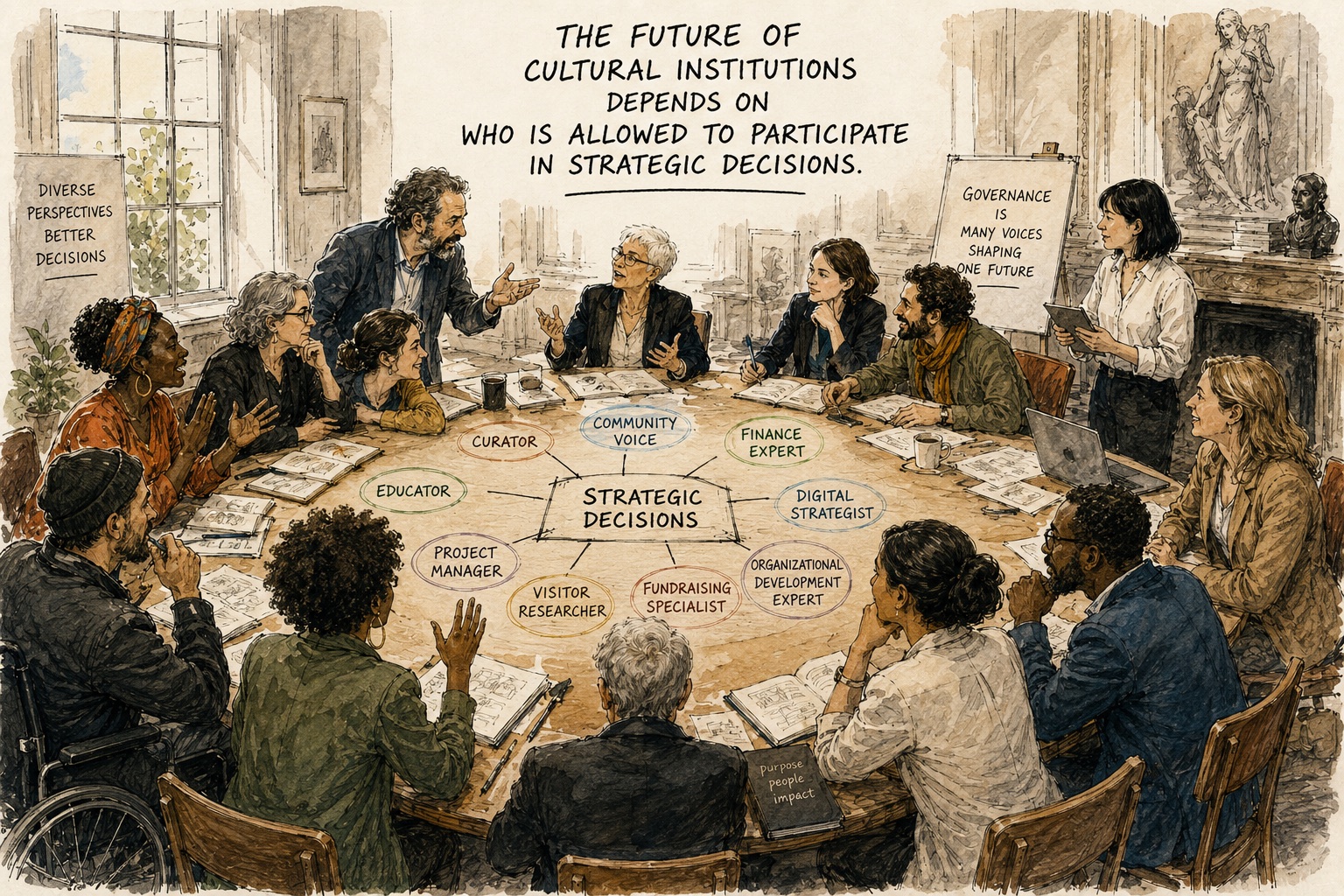
It is about re-centering the entire system around:
- purpose
- impact
- use
- long-term value
It means asking different questions from the start:
- Why does this project exist?
- Who is it for?
- What will be different because of it?
- How will we know?
The real issue
The uncomfortable truth is this:
We are producing value in cultural heritage every single day. Economic, social, educational, territorial.
But too often, we are not making that value legible within the systems that decide funding.
And what is not legible is not funded.
So the issue is not that cultural heritage lacks value. It is that it is still too often structured, measured, and communicated in ways that do not allow it to compete.
Where real innovation lies
If the next phase of cultural heritage is to be truly transformative, it will not be because of better tools.
It will be because we learn to align what we do, why we do it, and how we demonstrate its impact.
That is where the real innovation lies.