Ever looked back at your work, your clients, your projects, and thought, “Wow… that one didn’t go so well.” Or “Why did that project never really work?” It’s puzzling. You’re still the same person. You bring the same energy, the same skills, the same commitment… and yet things don’t always go well.
As I am constantly thinking and evolving, I started looking at my work through a lens inspired by the most famous Seth Godin (adding hashtags and links here is embarrassing, search for Godin’s work literally everywhere :)).
What won’t this client see without me? What won’t they dare to do if I’m not there, or achieve without my help? Or, even better, what becomes possible because I’m there?
For me, the answer is surprisingly clear. Growth. Possibilities beyond what already exists. Movement. I naturally look for progress, for ways to build something forward and upward. I look at what’s already there and instinctively think about how it could become stronger, more sustainable, more ambitious than it is today. And, strangely enough, I enjoy the uncomfortable part: helping people find the courage to actually make those changes.
So my answer today is this: my clients become less afraid of evolving. They become more courageous. They feel supported in looking at growth and actually embarking on that journey because I help them see the path and make it feel less scary.
That’s the space where I do my best work. Growth beyond what seems possible today.
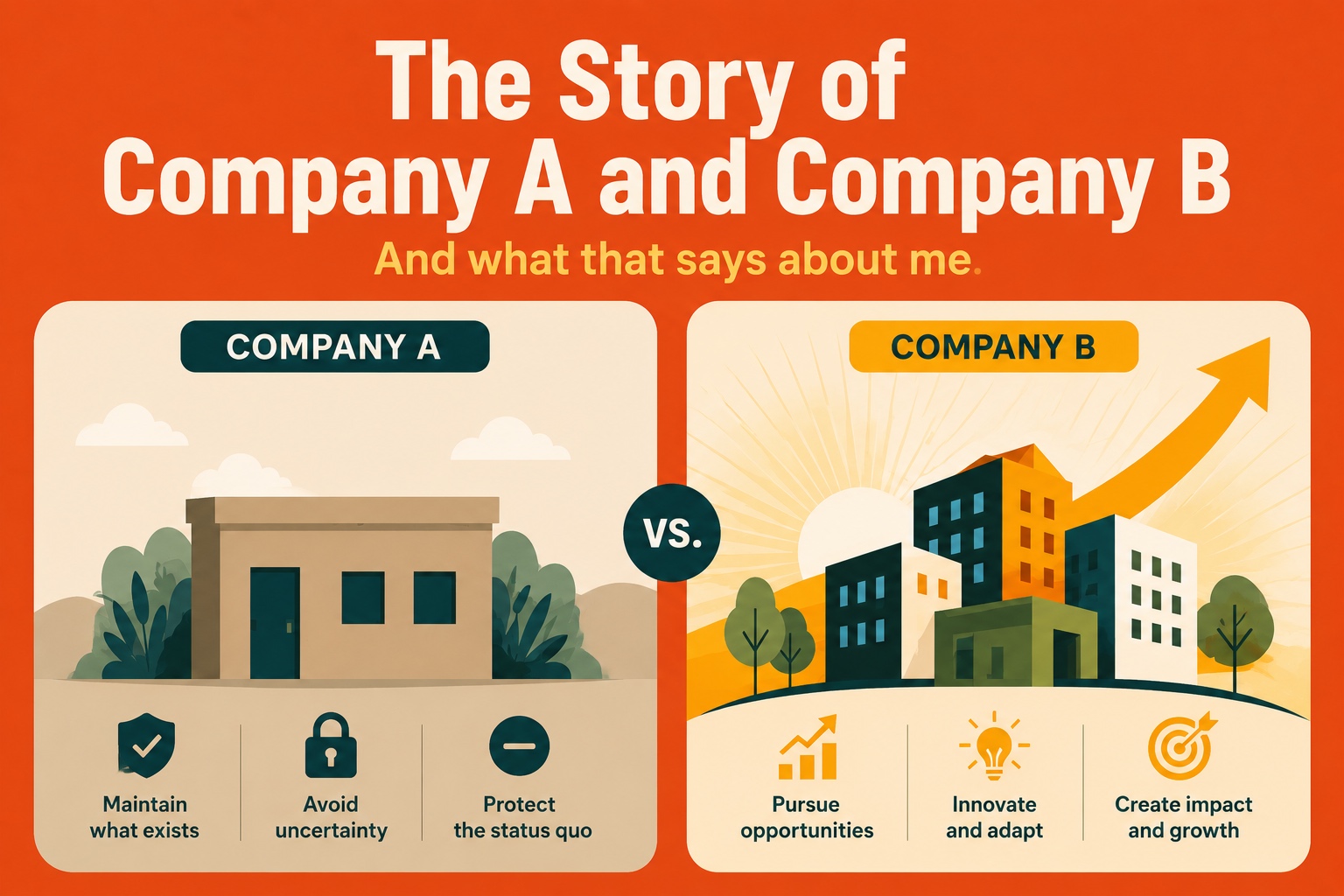
Here’s the story of Company A and Company B. And what that says about me.
Company A and Company B are two organizations I worked with a few years apart.
In the first one, I kept seeing opportunities to grow. The programs were losing money, participation was declining, and I genuinely believed they could become something much bigger. So I did what comes naturally to me. I researched, questioned assumptions, proposed a different direction. Eventually, those changes were implemented and the programs became successful.
The relationship didn’t.
A few years later, I joined Company B. I was involved in developing a completely new line of business. International. Ambitious. Big projects. New clients. New partnerships. It was my jam. I was asked to help build something that didn’t exist yet. We questioned assumptions, challenged existing approaches, created new ways of working, found the right people, and shaped an entirely new line of business.
This time, the relationship flourished. Happy to say that the company is thriving!
For a long time, I looked at these two experiences as if one represented success and the other failure. Today I finally have an answer.
I brought almost exactly the same strengths to both organizations. The difference was that Company A wasn’t really looking for the kind of growth I naturally bring. They hired me for my skills, but what they actually wanted was someone to maintain what already existed. Change felt risky, and not recognized as necessary. So I tried to adapt. What I didn’t realize soon enough was that I wasn’t using my best abilities. I was also being asked to achieve significantly better results without fundamentally changing anything. Which, by the way, was setting me up for failure.
This little Godin-inspired exercise has given me not only a way to make peace with a few old disappointments, but two major insights I now carry into every new client relationship:
- My unique value is helping people see beyond what’s there: possibilities for growth, making change feel less frightening, and giving them the confidence to move towards it.
- If that’s my best contribution, I have a roadmap for recognizing when I’m the right fit for a job, and when a client doesn’t want the best I have to offer.
Summing this all up, I think doing your best work requires three things to come together.
- Understand the unique value you naturally bring. Not your job title, not your list of skills, but the thing that changes what becomes possible for the people around you.
- Learn to recognize it, articulate it, and position it clearly.
- Find organizations that genuinely need that value.
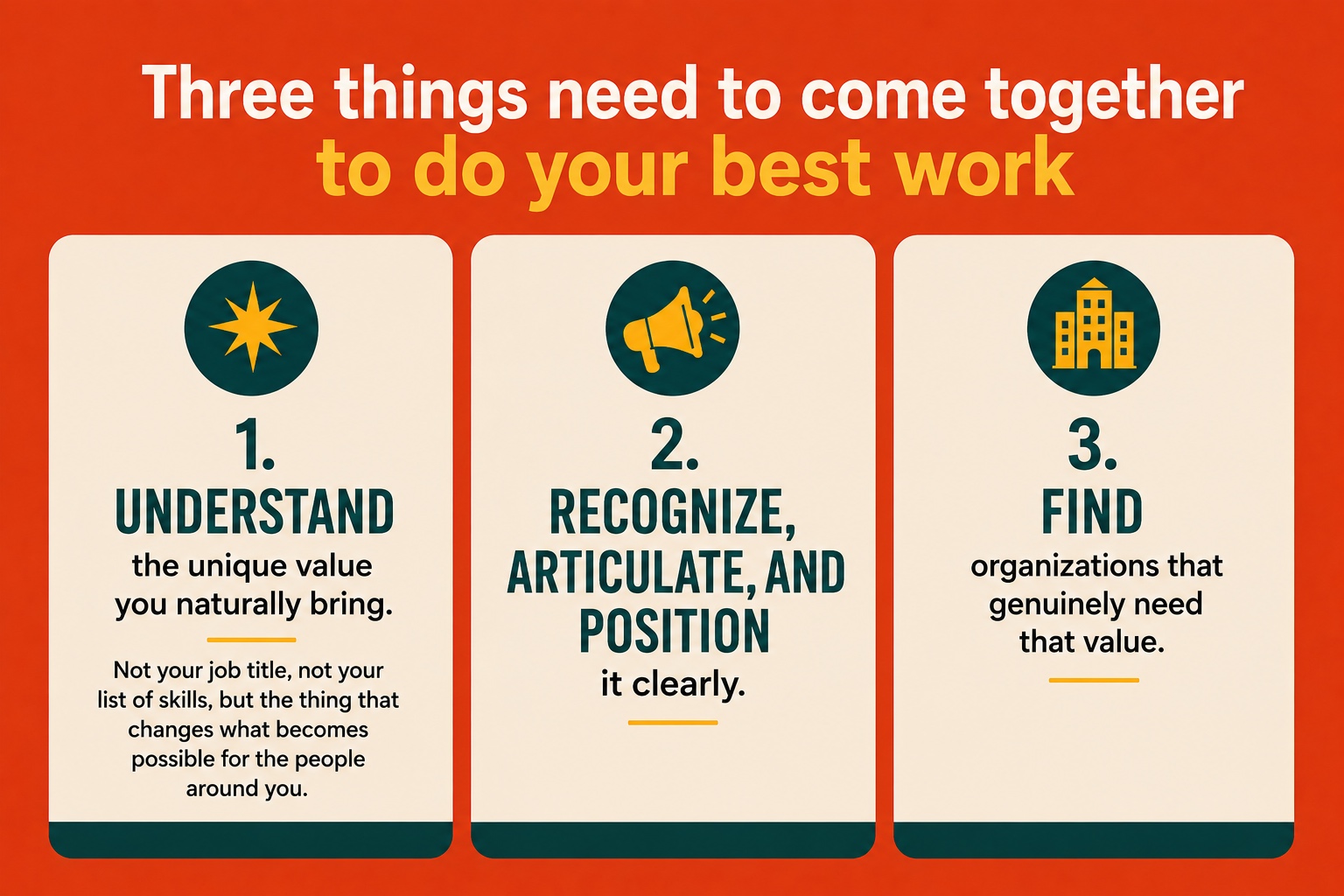
Miss one of those three, and you may still work incredibly hard and produce good results.
But you’re unlikely to create the kind of impact you’re capable of, either for yourself or for your client.